



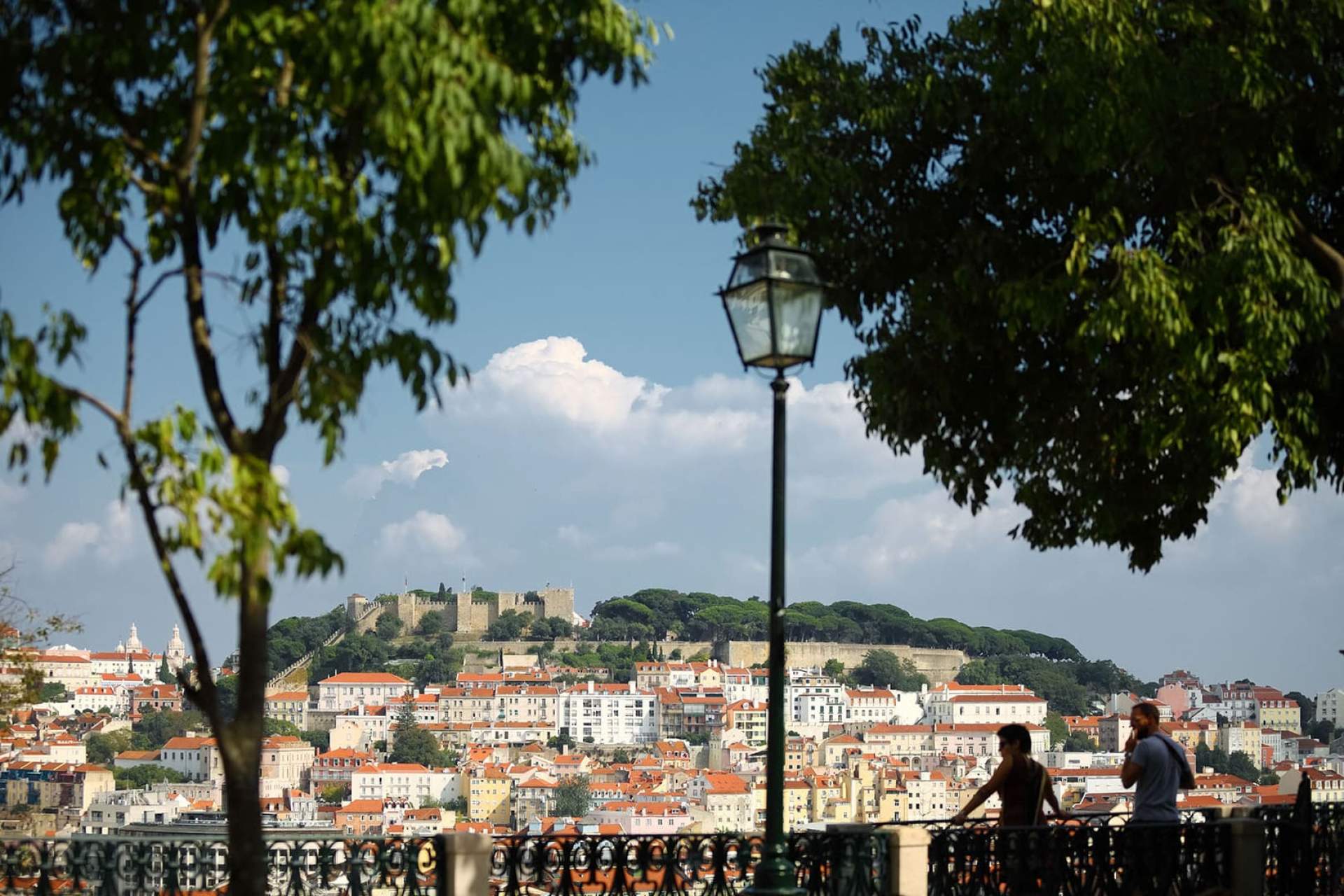
Lisboa
The centre of a vast and rich region, which fertility was acclaimed by Arab authors, the territory centred in Lisbon, on which several other towns depended, such as Sintra, Santarém or Alenquer, was one of the most profusely Islamised in the Al-Andalus period.
At the time of the Christian conquest in the 12th century, and given its position as a land and sea frontier, the Islamic Al-Usbuna was one of the most relevant and populous in the peninsular West and one of the extremes of Mediterranean port trade connected to the rest of the Islamic world by sea.
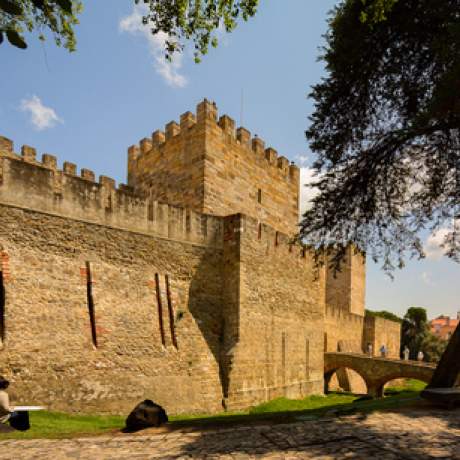
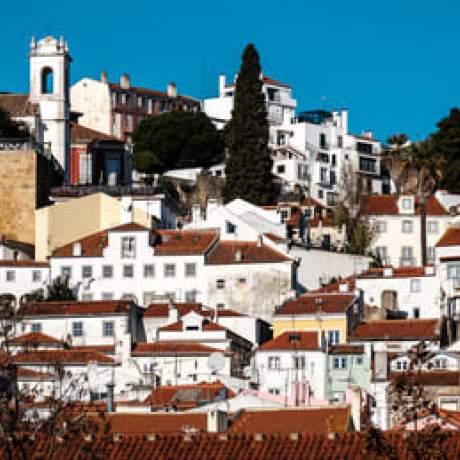
During the Moorish domination and following the Mediterranean tradition of port-cities, the urban layout of the city was developed in two aggregating poles. In the highest part of the city rose the Alcazaba, with its own walls, still practically preserved today, and corresponding to the core of Castelo de S. Jorge. On the riverside were concentrated artisans, fishermen and traders, and an intense port activity, including naval construction and repair. Between these two poles was centred commercial, civic and religious life - the medina was defended by about 2 km of wall of the so-called "Cerca Moura" (Moorish Fence), which separated it from the suburbs such as Alfama, a neighbourhood outside the walls which communicated with the interior through the gate of Alfama, and where there were thermal springs, the baths called al hamma in Arabic, and which thus gave meaning to the toponym Alfama, today one of the most typical neighbourhoods of Lisbon.
Since the Crusader Osberno's reference, in his letter De expugnatione Lyxbonensi - one of the most enlightening texts on Islamic Lisbon and its conquest by Christians - to the city's ancient aljama mosque, its existence has been investigated under the current Christian cathedral. You must, therefore, pay a visit to the Lisbon Cathedral which reflects multiple uses from, and in, different times, and where archaeological activity has uncovered Muslim dwellings and, more recently, fragmented buildings belonging to the Almoravid era, including a compartment possibly belonging to a baths building and 3 floors of a public building interpreted as belonging to the Almoravid aljama mosque complex.
The entire area of the Castle and the Cathedral has been the object of archaeological excavations that testify to the existence of an Islamic city of great political, commercial and religious importance, where Muslims, Christians and Jews coexisted. In fact, until the Christian conquest, Lisbon maintained an important Mozarabic community - Christians who inherited the Visigoth ritual that they continued to practise, but who adopted Arabic culture and language - as witnessed by the so-called "plate of paradise", a piece of great artistic quality with iconography very dear to Peninsular Christians of the time, housed in the Lisbon Cathedral.
The city changed hands but coexistence lasted. After the conquest by the Portuguese king Alfonso Henriques in 1147, Lisbon and its surroundings were home to the most important Moorish community until the end of the 15th century. The municipality of Lisbon benefited from the granting of a charter to the Moorish nationals as early as 1170 by that monarch. After the 4th Lateran Council, which in 1215 imposed the delimitation between the Christian community and the other religious minorities, the Muslims were relegated to the Mouraria (Moorish Neighbourhood), a neighbourhood still known by the same name and one of the most typical and multicultural in Lisbon.
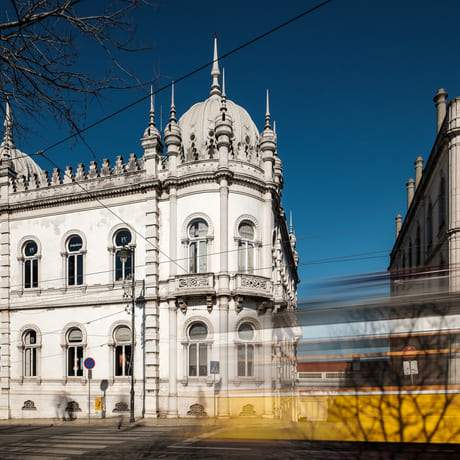
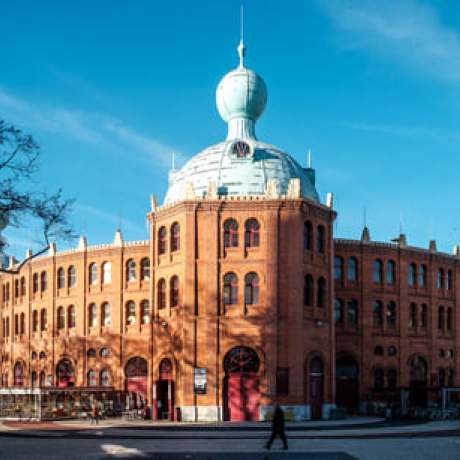
This strong Moorish community, which remained in the city until the Edict of Expulsion of the Jews and Moors from Portugal issued by King Manuel I of Portugal (1497), imprinted a strong Mudéjar mark on Lisbon that endured and would come to influence the city's neo-Arabic style architecture such as the Bullfighting Square of Campo Pequeno, the Ribeiro da Cunha Palace, the Hotel Chafariz d`El Rey, and the neo-Arabic architectural and decorative elements inside the Alverca Palace, commonly known as the Alentejo House, the Portuguese Film Library and the Arabic Room in the Ratton Palace (Constitutional Court).
There are several vestiges of Lisbon's Islamic past that can be found in various museum centres throughout the city, such as the National Museum of Archaeology, the Casa dos Bicos Archaeological Centre and the Pimenta Palace Centre, both part of the Museum of Lisbon, the Archaeological Centre of Rua dos Correeiros, the Carmo Archaeological Museum, as well as the Calouste Gulbenkian Museum, which houses Calouste Gulbenkian's remarkable private collection, with emphasis on the section on Islamic Oriental Art.
You should also visit the Ferdinand Room in the Corpo Santo Hotel and the archaeological exhibition in the Eurostars Museum Hotel, places full of history where you can also witness the Islamic legacy in the city of Lisbon.
Close
Search results for:
No results were found matching your search.
Information available soon.