


Cofinanced by:
Compete Logo Portugal 2020 Logo União Europeia Logo

Find other stages here

  • Stage Duration
    20.8 Km
  • Duration
    05h10
  • Difficulty
    Difficult
  • Maximum Altitude
    440m
  • Type of Surface
    Asphalt

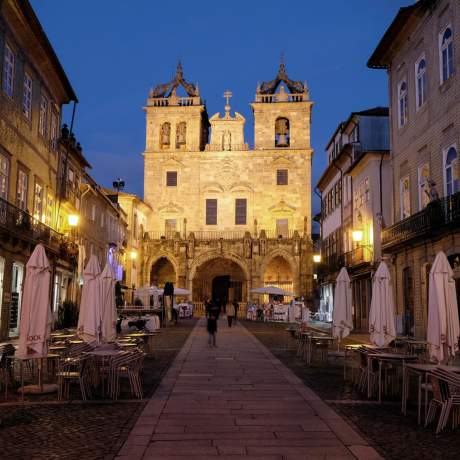
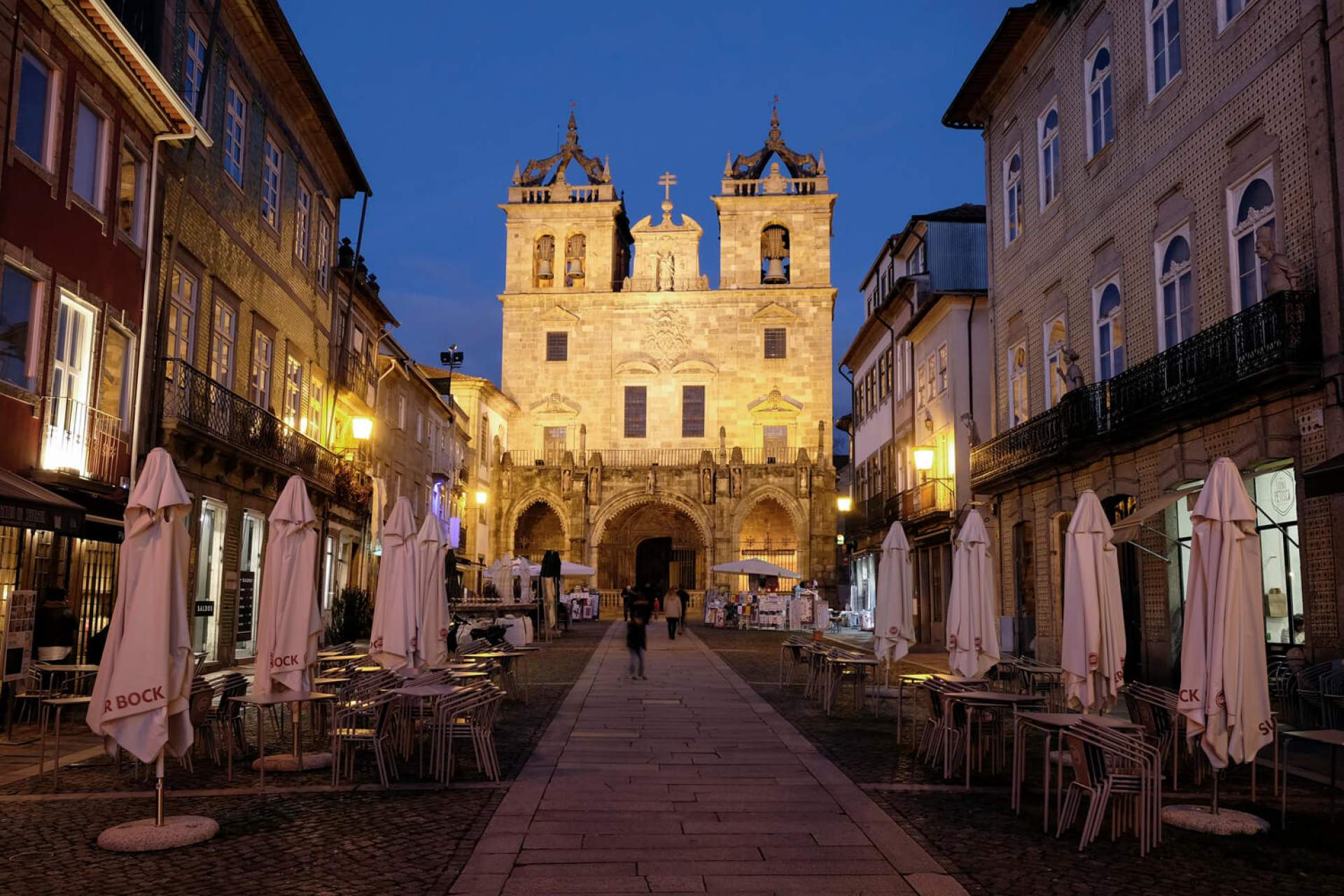
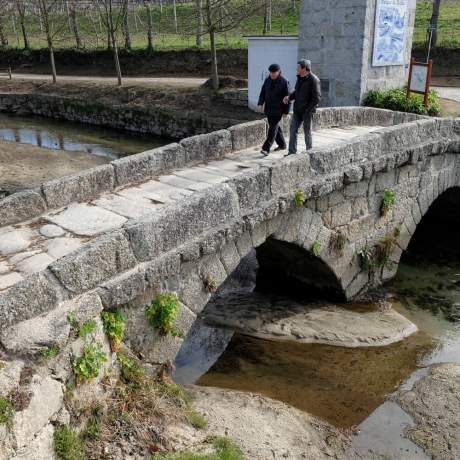
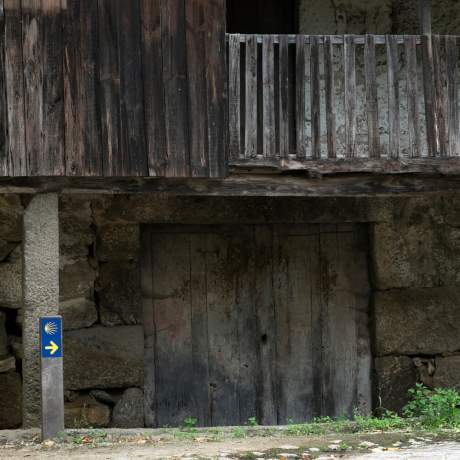
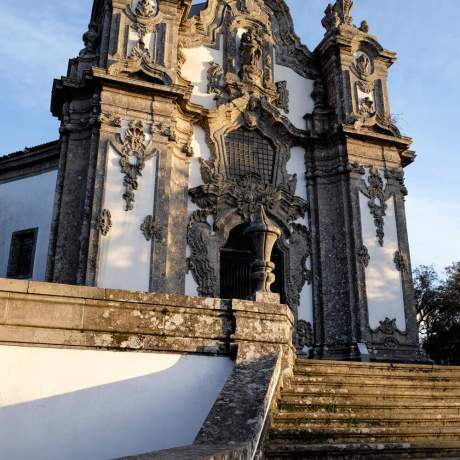
This stage follows part of the medieval road that once linked Guimarães, the capital of the County of Portugal, to Braga—the magnificent Bracara Augusta, capital of the Roman province of Gallaecia and later of the Suebi Kingdom. The first stop is at the Romanesque bridge of Roldes, an ideal place to rest and admire the crystal-clear waters of the River Selho. Between Fermentões and Ribeira, the route passes through a peri-urban landscape but, towards the end, it leaves the built-up area and enters dense woodland leading to the River Ave and the Ínsua Park. Cross the Roman bridge of Caldas das Taipas and stop once again at the Fonte dos Quatro Irmãos, one of the most curious monuments along the Torres Route. Prepare yourself for the demanding ascent of the Serra da Falperra. There has been no climb quite like this since the Douro landscapes of Régua and Mesão Frio. The first stretches of stone paving appear in Lage and, from there to the Falperra Sanctuary, steep slopes of uneven paving follow one another. If it has rained during the night, you may find some sections difficult or even impossible to negotiate, made worse by the passage of motorised vehicles. Upon reaching the top, there is still the sanctuary's monumental staircase to climb. The descent follows paths running parallel to the EN 209. If you walk this stage during the summer or at weekends, you are likely to encounter cyclists passing at considerable speed, so extra care is essential. After the Church of Santiago de Fraião, you are already on the urban outskirts of Braga, entering the city through the ancient Gate of Santiago. Your destination is Braga Cathedral, the most important monument on the Torres Route before reaching the Cathedral of Santiago de Compostela.
This stage follows part of the medieval road that once linked Guimarães, the capital of the County of Portugal, to Braga—the magnificent Bracara Augusta, capital of the Roman province of Gallaecia and later of the Suebi Kingdom. The first stop is at the Romanesque bridge of Roldes, an ideal place to rest and admire the crystal-clear waters of the River Selho. Between Fermentões and Ribeira, the route passes through a peri-urban landscape but, towards the end, it leaves the built-up area and enters dense woodland leading to the River Ave and the Ínsua Park. Cross the Roman bridge of Caldas das Taipas and stop once again at the Fonte dos Quatro Irmãos, one of the most curious monuments along the Torres Route. Prepare yourself for the demanding ascent of the Serra da Falperra. There has been no climb quite like this since the Douro landscapes of Régua and Mesão Frio. The first stretches of stone paving appear in Lage and, from there to the Falperra Sanctuary, steep slopes of uneven paving follow one another. If it has rained during the night, you may find some sections difficult or even impossible to negotiate, made worse by the passage of motorised vehicles. Upon reaching the top, there is still the sanctuary's monumental staircase to climb. The descent follows paths running parallel to the EN 209. If you walk this stage during the summer or at weekends, you are likely to encounter cyclists passing at considerable speed, so extra care is essential. After the Church of Santiago de Fraião, you are already on the urban outskirts of Braga, entering the city through the ancient Gate of Santiago. Your destination is Braga Cathedral, the most important monument on the Torres Route before reaching the Cathedral of Santiago de Compostela.
Read more > Read less
Points of Interest
Close List Points Interest
 
Zoom out
Zoom in
Print Map
Full Screen Map
Current Location
Caminhos da Fé
Obrigado!
Loading
Por favor aguarde...